Wednesday, June 1, 2011

Don't Judge a Book By Its Cover

Are these grotesque organisms the key to cure cancer? I believe they are. Some might say, “How in the world are these being going to help cure cancer?” After my brief explanation, people reading this will understand that they have the potential to fight our dreaded foe.

Since they are small in size, they should only live for a couple years, but they can live up to 28 years. This is possible because they have a unique mutation that controls mitosis almost perfectly. They have two genes that act as double protection, p16 and p27. Both of these are found in humans, but why are we not impervious to cancer? Our p16 gene is inactive so we do not have that unique double barrier protection against cancer. These two genes might be only the beginning of the story, but so far researches only found this to be the cause of their immunity.

As you can see here, the naked mole rat has an advantage of detecting uncontrolled proliferation. The p16 gene stops the uncontrolled mitosis earlier and therefore stops the cancer from even commencing its attack on their bodies. Without this gene, they would be susceptible to cancer just like other animals and us.

I believe this is the cornerstone in finding a way not only to cure, but prevent cancer indefinitely. We could use gene therapy to activate this p16 gene. If this is successful, people won’t have to live shortened lives due to chemotherapy, amputation, or cancer itself. This p16 gene is similar to vaccination, but the process of modifying genes is risky and unpredictable.

Currently, everything is still in its experimental stages. With scientists working around the clock on this new finding, we could expect the cure and prevention coming in our lifetime. As the research progress, I hope that more information will be found and not just the p16 gene will help prevent cancer.

If you have been reading my post, you can clearly see my opinion is very optimistic of the naked mole rats’ potential. The cure is only a fingers length away and we must work much harder to grasp this p16 gene. I do not doubt that these organisms can cure cancer, since anything is possible.

My Sources:

http://www.popsci.com/science/article/2009-10/hideous-rodent-may-provide-cure-cancer

http://nextbigfuture.com/2009/10/gene-therapy-cures-congenital-blindness.html

http://blogs.discovermagazine.com/80beats/2009/10/27/what-can-we-learn-from-the-naked-mole-rats-immunity-to-cancer/

http://www.sciencedaily.com/releases/2009/10/091026152812.htm

http://www.viewzone.com/nakedrats.html

http://genomics.senescence.info/sequencing/index.html

I commented on:

Dylan Juschko
http://mwbioblogs.blogspot.com/2010/12/designer-babies-saving-people-or.html

Jeefchan Chandraseqar
http://jeefchan.blogspot.com/2010/12/medical-marvel-cosmetic-controversy.html

Wednesday, November 10, 2010

Save the Rainforest! Amazon? No, the other one!

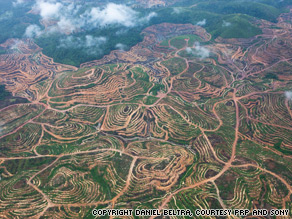
Most people know or at least heard of the problems in the Amazon Forest, but many people neglect that a similar problem is occurring in the Southeast Asian Rainforest and other ecosystems. This rainforest is the oldest of its kind dating back 70 million years. Beautiful areas like the one below are becoming rarer and rarer due to companies destroying them for unessential resources. What was once a utopia will soon mutate into a dystopia. With this in mind, we HAVE to take ACTION.

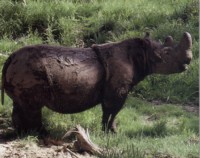
Every single section of the Southeast Asian Rainforest will end up looking like the one above if nothing is done to alleviate the destruction which we, ourselves are letting happen before our eyes. A mental picture like this should dissuade us from permitting anyone to continue with their plans of deforestation. Species are suffering from our deforestation which is directly links to biodiversity. The Sumatran rhinoceros (image below) survives only in a small part of the forest and is thought to be only 300 to 500 in numbers. The Javan Tiger is already extinct, which will be the terrible fate for several species and cause a chain reaction disrupting the biodiversity keeping the ecosystem in balance. Biological Catastrophe is what is happening and this may be no exaggeration.
Organisations like SEARRP, South East Asia Rainforest Research Programme, and Greenpeace recognised the impact rainforests have on biodiversity and the world. They also realise the plans to destroy the rainforest to increase profits. Earth should not be sacrificed for something materialistic and activists and research programmes helps us understand this.SEARRP specializes in researching biodiversity of the Southeast Asian Rainforest and methods to maintain it. On the other hand, Greenpeace use more aggressive tactics. They attacked Wal-Mart and other companies to stop their deforestation for products like paper, pulp and palm oil. Greenpeace actually made a video (click here, warning it's a bit graphic) attacking Nestle to discourage them from using palm oil. These are only few out of many organisations created to stop deforestation, especially the vital rainforests of biodiversity.

Humans are organisms who excel at learning. Organisations are learning that companies are destroying biodiversity for money, especially the rainforests which is a crucial part in the homeostasis of the Earth. As the destruction increases, so does our awareness, so this parabolic curve of devastation will end up curving back down. Stabilization will only be achieved if we listen to organisations like Greenpeace and SEARRP and hopefully stop the Sumatran rhinoceros and several other species from becoming extinct.

In my opinion, biodiversity in EVERY ecosystem should be managed equally. Biodiversity in the Amazon Rainforest should not be more significant than the Southeast Asian Rainforest just because it is better known than the Southeast Asian Rainforest. After all we should be the leaders of Earth not the reapers of mayhem.

Comments:

Kendra Geniza
Rowena Rollon

Sources:

"Asian Rainforest." Rainforest Facts. Web. 10 Nov. 2010. http://www.rainforest-facts.com/asian-rainforest.html.

Benders-Hyde, E. "Southeast Asian Rainforests." Blue Planet Biomes. 2002. Web. 10 Nov. 2010. http://www.blueplanetbiomes.org/se_asian_rnfrst.htm.

Butler, Rhett A. "Walmart Fires Back at Greenpeace over Deforestation Charges." Conservation and Environmental Science News. 7 July 2010. Web. 10 Nov. 2010. http://news.mongabay.com/2010/0707-walmart_vs_greenpeace.html.

"Greenpeace Halts Rainforest Destruction in Kampar Again by Pulp and Paper Giant APRIL." Greenpeace USA. 15 July 2010. Web. 10 Nov. 2010. http://www.greenpeace.org/usa/en/media-center/news-releases/Greenpeace-Halts-Rainforest-Destruction-in-Kampar-Again-by-Pulp-and-Paper-Giant-APRIL-/.

Lubber, Mindy S. "Walmart and General Mills Bullish on Sustainable Palm Oil." Business & Financial News, Breaking US & International News | Reuters.com. 22 Oct. 2010. Web. 10 Nov. 2010. http://www.reuters.com/article/idUS83507820020101022.

"Research: The Sabah Biodiversity Experiment - The Royal Society SEARRP, Danum Valley, Sabah, Malaysia." South East Asia Rainforest Research Programme (SEARRP). Web. 10 Nov. 2010. http://www.searrp.org/research_sabah_biodiversity.cfm.